Half Ironman training plan
Half Ironman Training Plan for Smarter 70.3 Preparation
70.3 is the distance where pacing and durability win. PaceBeats builds both into your season from your Garmin history — and shows you the whole plan, base to taper, before you commit to anything.
Best for
Athletes preparing for a first 70.3, returning to the distance, or chasing a faster half-distance race.
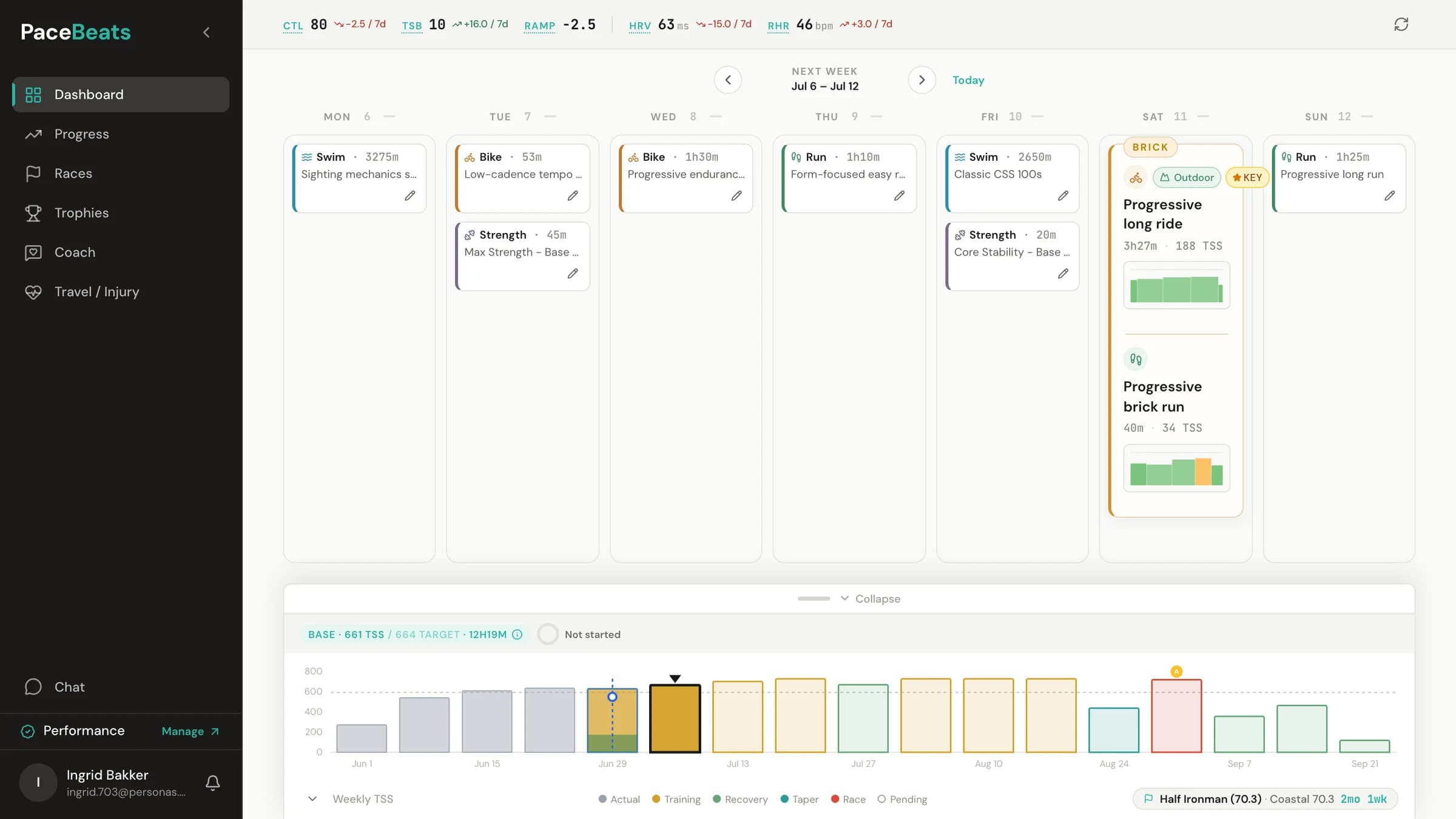
A real week from a PaceBeats athlete building toward this race — built from their Garmin history, rebuilt every week.
The core challenge of 70.3 training
A Half Ironman is long enough to punish weak aerobic durability but short enough that threshold and pacing still matter.
- Bike durability protects the run
- Long runs build confidence but must be dosed carefully
- Swim fitness should reduce race-day cost, not dominate the week
- Fueling practice belongs inside key bike and brick sessions
A practical 70.3 build
Most athletes need progressive volume, race-specific intensity, and recovery weeks that arrive before performance drops.
- Base phase builds frequency and aerobic control
- Build phase adds tempo, threshold, and longer race-specific work
- Peak phase rehearses nutrition, pacing, and brick execution
- Taper preserves sharpness while reducing accumulated fatigue
How PaceBeats adapts the plan
The system watches completed workouts, subjective feedback, and readiness trends so it can adjust the next week without breaking the larger race arc.
- Fatigue flags can reduce long-run risk
- Strong bike execution can support progression
- Missed swims can be restored without crowding key bike/run work
- Brick sessions appear when they match the phase and athlete readiness
What to avoid
The common mistake is copying an advanced template because the race feels serious. The better move is matching progression to current capacity.
- Do not stack missed workouts into the next two days
- Do not chase volume if key sessions are falling apart
- Do not add strength soreness near decisive race-specific sessions
- Do not taper by doing nothing; reduce fatigue while keeping rhythm
A representative 70.3 build week
Mid-build, for an athlete training ~10–11 hours a week. The two anchor sessions are the long ride with race-pace blocks and a long run that finishes at race effort — everything else supports them.
Recover
- Rest or 30 min mobility + core
- Optional 30 min strength (maintenance)
Swim threshold + easy run
- Swim 60 min — 10×100m at CSS, 10s rest
- Run 40 min easy (Z2)
Bike sweet-spot
- Bike 90 min — 3×15 min at 88–94% FTP, 5 min easy between
Swim aerobic + run tempo
- Swim 50 min — 400 + 4×200 aerobic, open-water sighting
- Run 55 min — 25 min at 70.3 pace
Spin easy
- Bike 45 min Z1–Z2 recovery, or full rest
Long ride + fuelling
- Bike 3:00 — Z2 with 3×20 min at 70.3 power
- Rehearse race nutrition (60–90g carbs/hr)
Long run off the bike
- Run 90 min — last 20 min at 70.3 pace
- 10 min easy spin to open the legs first
PaceBeats builds weeks like this from your training history — then reshapes them when you miss a session, nail a hard one, or your schedule shifts. Predict your race time or start free.
Questions athletes ask
How long should a Half Ironman training plan be?
Many athletes use 16 to 24 weeks, depending on their current base. Experienced athletes with consistent training may need less; beginners usually benefit from more runway.
How often should I do brick workouts for a 70.3?
Brick frequency should rise during the build and peak phases, often from occasional short transitions to more race-specific bike-to-run sessions.
Next step